Portable Car Wireless Digital Display Intelligent Electric Tire Pump with ABS and Metal Construction, 120W Power, 35L/min Air Flow, LED Lighting, USB Charging, and 3-Metre Power Cord for Emergency and Routine Tyre Inflation


Portable Car Wireless Digital Display Intelligent Electric Tire Pump with ABS and Metal Construction, 120W Power, 35L/min Air Flow, LED Lighting, USB Charging, and 3-Metre Power Cord for Emergency and Routine Tyre Inflation
Portable Wireless Digital Display Car Tyre Pump with 120W Power and 35L/Min Air Flow
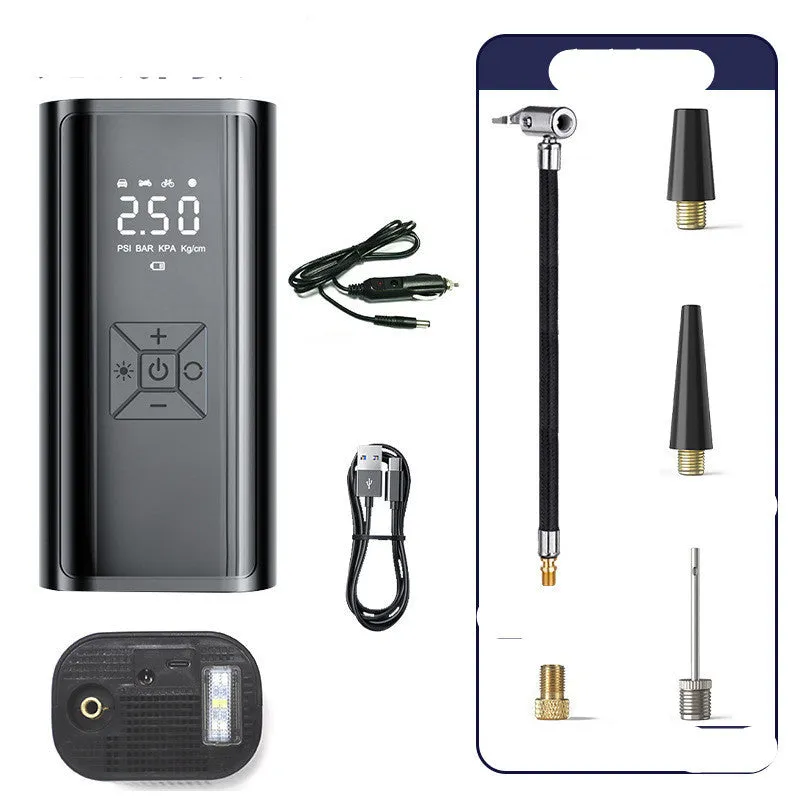
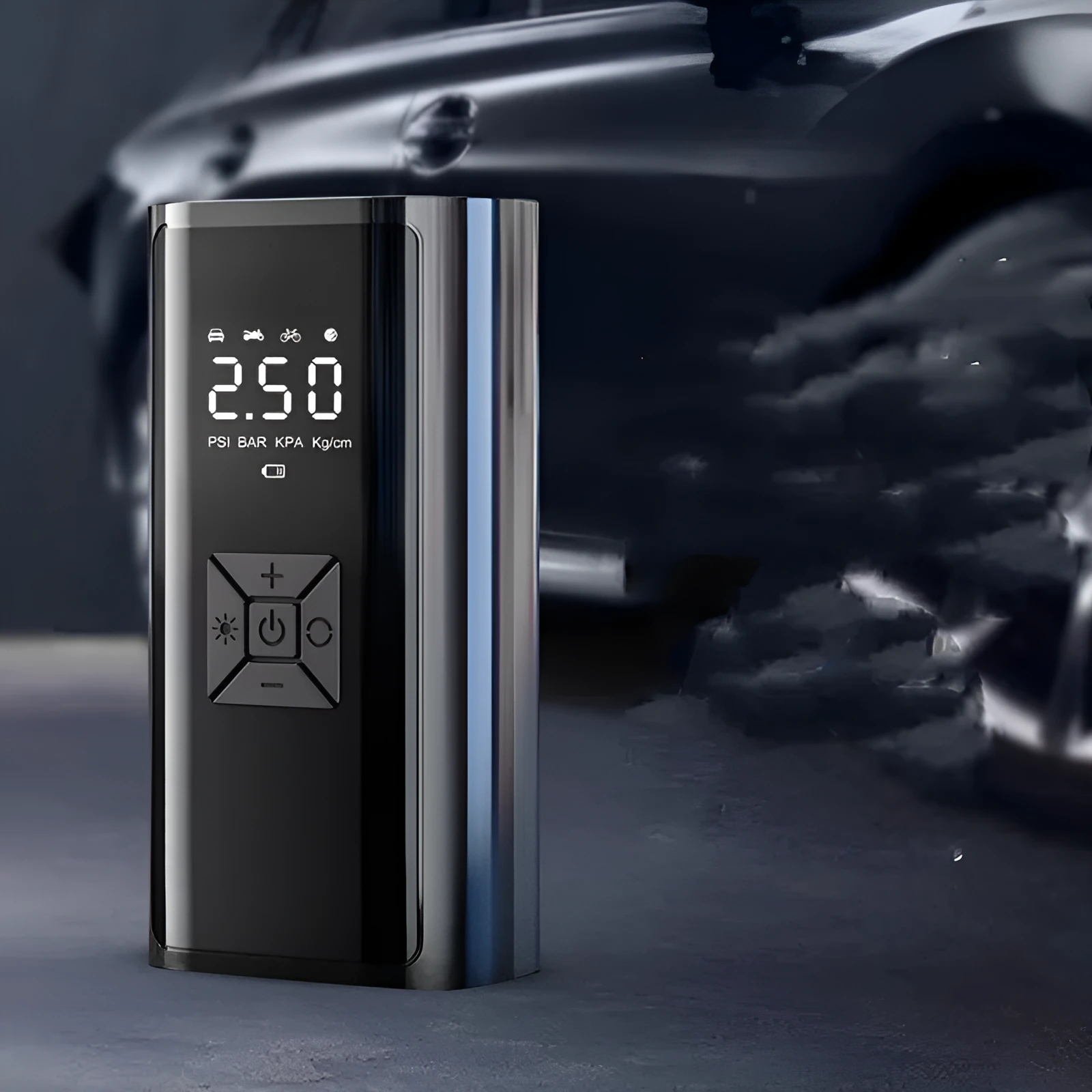
This intelligent electric tyre pump is designed as a self-sufficient tool for drivers, combining the convenience of wireless operation with the reliability of a wired connection in selected models. It addresses the common need for on-demand tyre pressure correction, whether adjusting for seasonal changes, recovering from a slow puncture, or preparing for a long journey. The core promise is a compact, powered unit that removes the physical effort of manual pumping and the uncertainty of analogue gauges, replacing them with a digitally controlled inflation process. With a substantial 35-litre-per-minute air flow driven by a 120-watt motor, it aims to reduce waiting time at the wheel, while the built-in lighting and charging functions extend its usefulness beyond simple inflation to become a more comprehensive roadside aid kit component.
Features and Construction
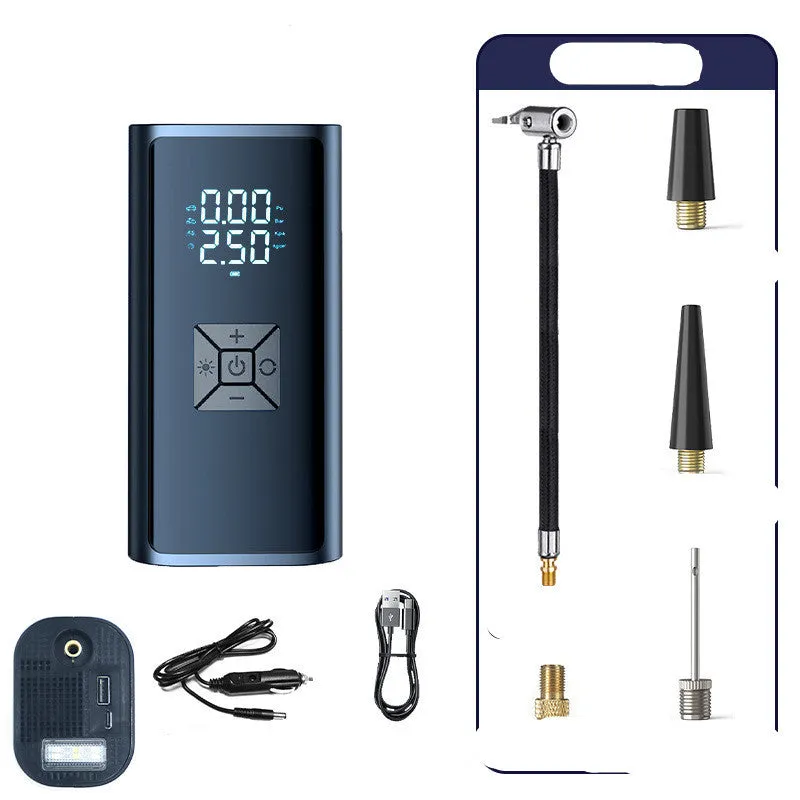
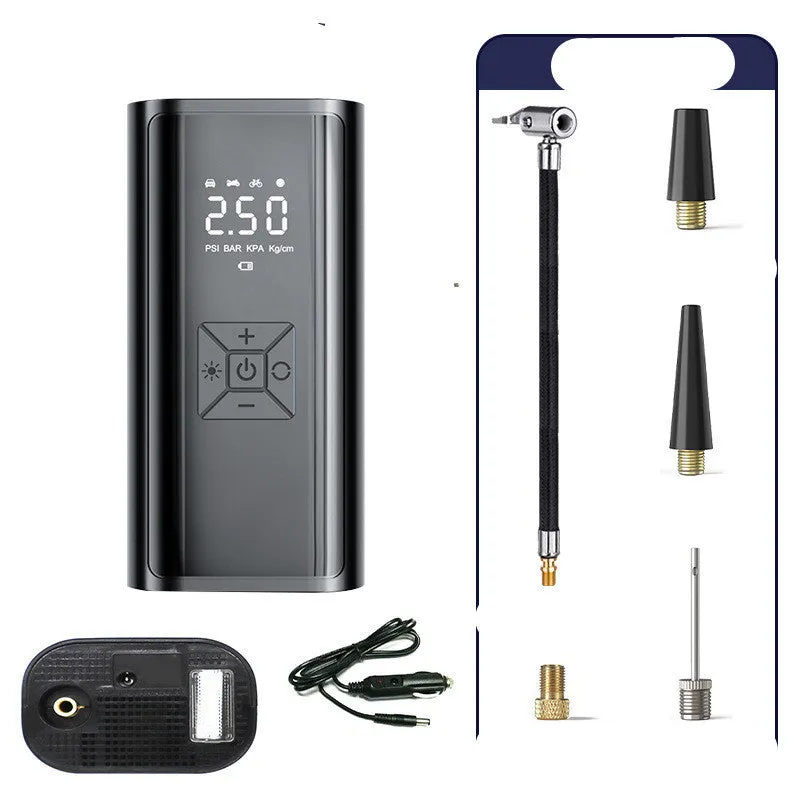
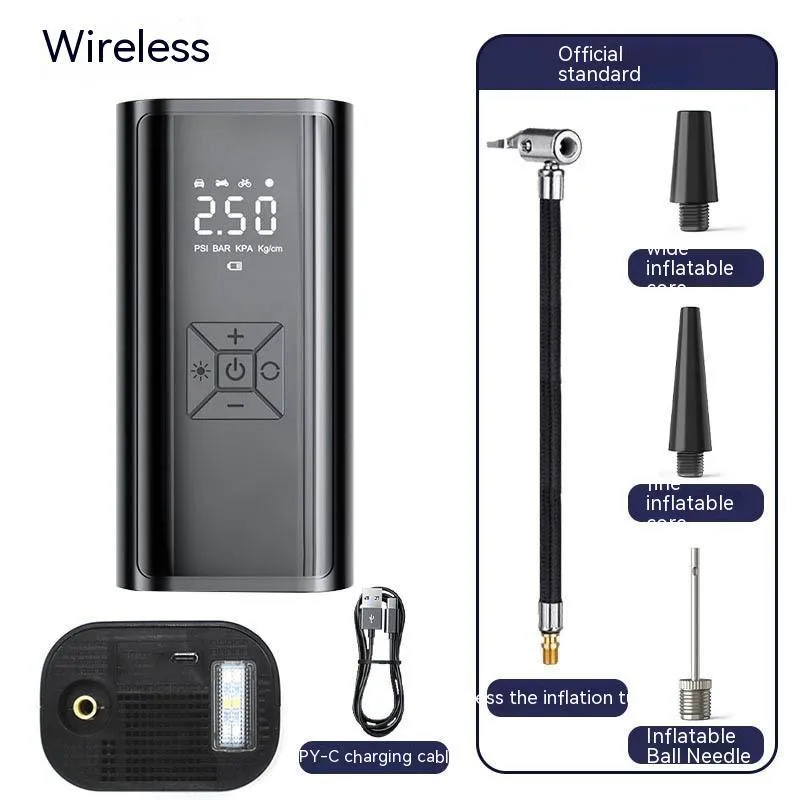
The pump's functionality is built around a clear set of measurable specifications and dual-use design choices. Its construction from ABS plastic and metal aims to balance durability with portability, making it suitable for storage in a car boot without excessive weight. The available model variations (B, C, D, F) indicate different primary power methods, allowing users to select based on their preference for wireless convenience or the assured power of a direct vehicle connection.
Material and Build
The housing utilises ABS plastic, a material chosen for its impact resistance and light weight, which is practical for a device meant to be carried and used outside the vehicle. Metal is used in internal components, likely within the motor assembly and pump mechanism, to handle the mechanical stresses of compression and the 5-ampere current. This material combination seeks to provide a robust enclosure that protects the electrical and pneumatic workings from the knocks of typical automotive use, without making the unit too heavy to handle easily at the tyre side.
Size and Practical Fit
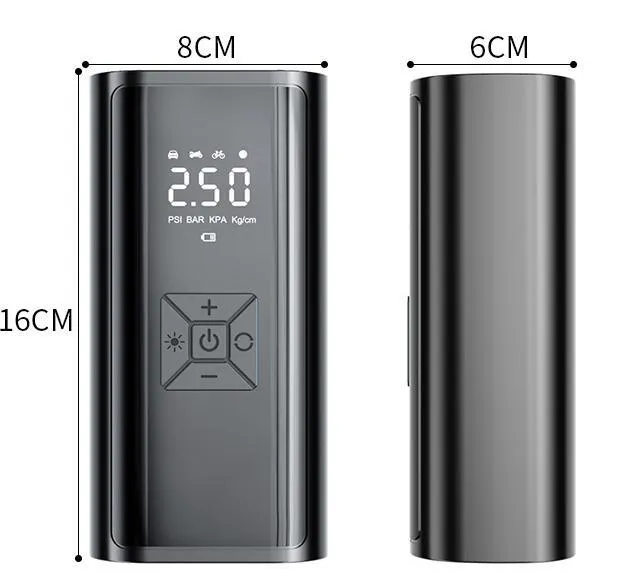
Key usability dimensions are the 3-metre main power cord and the 15-centimetre inflatable tube. The long cord provides ample reach from a single 12V socket to inflate tyres on the far side of the vehicle, a common frustration with shorter leads. The hose length is designed to connect comfortably to the valve while allowing the pump body to rest securely on the ground. These measurements directly address the physical challenge of positioning a pump effectively, especially on larger vehicles like SUVs or vans where wheel arches can be obstructive.
Uses and Placement
This product fits into two primary contexts: as an emergency tool kept in the vehicle for unexpected pressure loss, and as a routine maintenance device for home use. Its value increases in situations where access to a fuel station air line is inconvenient, such as in rural areas, early in the morning, or for drivers who prefer to maintain their vehicles privately. The digital display shifts the task from a guesswork chore to a precise adjustment, relevant for drivers conscious of tyre wear, fuel economy, and handling safety.
Event or Professional Use
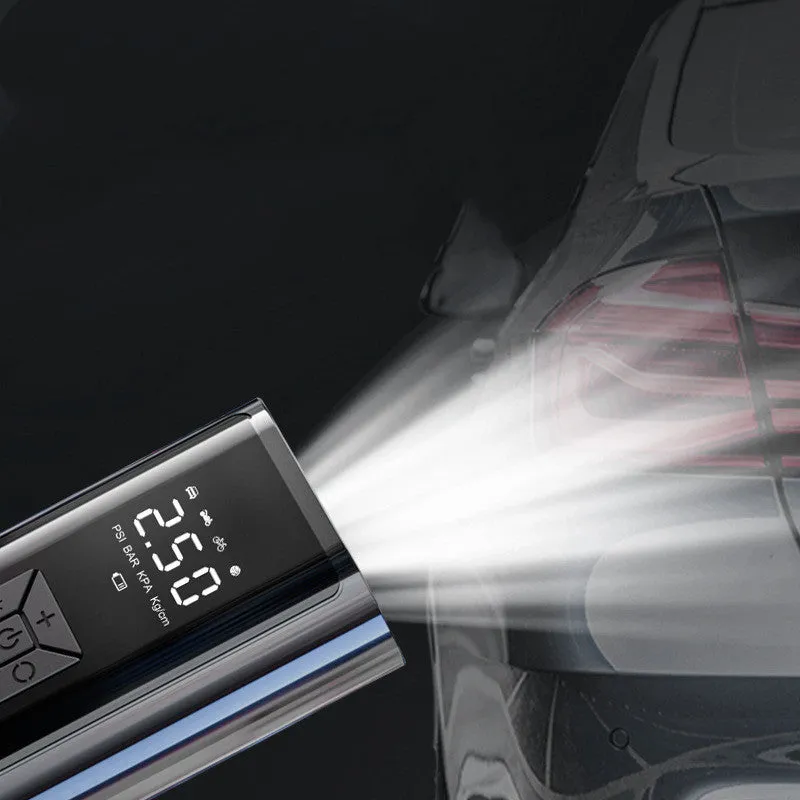
For professional drivers, fleet operators, or motorsport enthusiasts, the pump's high flow rate and accurate gauge support frequent pressure checks and adjustments. The wireless capability in models B and F is particularly useful in a pit garage or workshop setting where trailing cables are a hazard, or for quickly moving between multiple vehicles. The integrated LED light illuminates the tyre valve and pressure readout in poorly lit garages or at night trackside, while the USB port can keep a timing device or tablet charged. This turns a single-function pump into a multi-tool for organised automotive care.
Everyday Home Use
For the average motorist, the pump serves as a convenient alternative to visiting a garage. It allows for easy pressure top-ups in the driveway after cold weather drops tyre pressure, or before embarking on a holiday with a fully laden car. Parents can use it to maintain correct pressure on family vehicles and bicycles alike, using the appropriate adaptors. Storing it in the boot means it is always available to assist another motorist or to rectify a pressure warning light immediately, potentially avoiding tyre damage from under-inflation. The digital display provides clarity and confidence compared to the often unclear or faulty gauges on public air machines.
Benefits and Buying Value
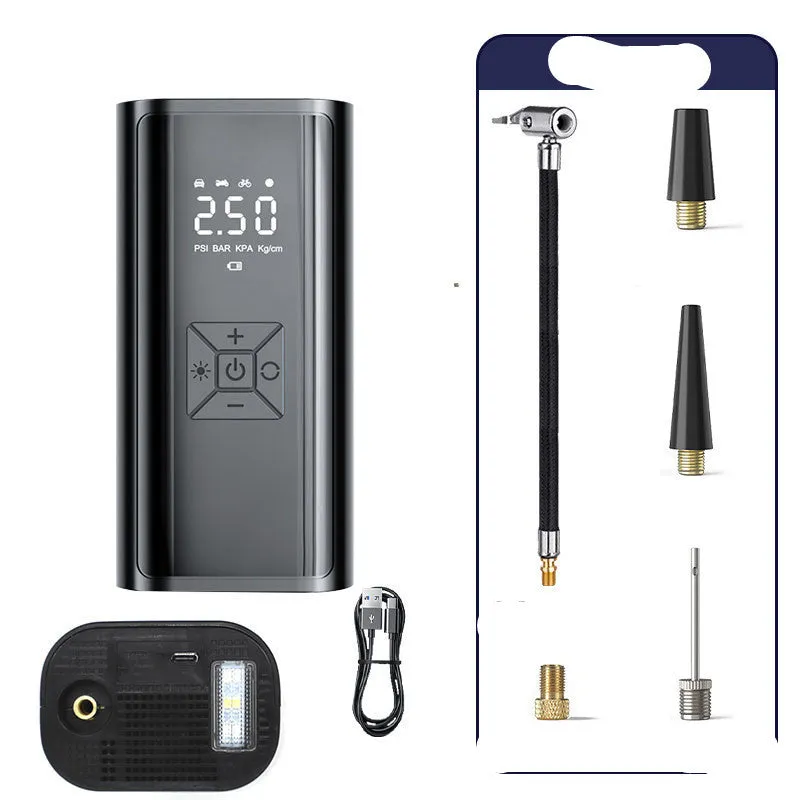
The value proposition centres on reclaiming time and control over a basic vehicle maintenance task, supported by the tangible specifications of power, flow rate, and included features. It replaces the need for separate devices—a pump, a pressure gauge, a torch—consolidating them into one powered unit. For buyers comparing options, the concrete differentiators are the 35L/min flow rate, the dual wireless/wired capability in specific models, and the addition of the LED light and USB charging, which are not always present in basic inflators.
Reuse and Low Maintenance
As a durable electronic tool, the pump is designed for repeated use over time. The stated construction materials suggest an intention for longevity. There is no disposable element; the unit is recharged or replugged for each use. This represents a shift from a consumable service (paying for air) or the limited lifespan of a cheap, low-power pump, to owning a capable tool. Low maintenance likely involves keeping the unit clean, ensuring the battery is occasionally charged (for wireless models), and storing the hose and cables neatly to prevent damage.
Why Choose This Product
Choosing this specific pump hinges on its combination of measured performance and extra utilities. The 120W power and 35L/min flow rate indicate a capable motor that should inflate a car tyre noticeably faster than many budget models. The digital display and integrated gauge remove the inaccuracy of dial gauges or the need to constantly check a separate device. The lighting and USB features, while secondary, provide real utility in common low-light or power-depleted scenarios. Finally, the option between models allows selection based on whether wireless freedom or the certainty of direct power is a higher priority for the user's typical use case.