
Silicon Labs EFR32MG21 Zigbee 3.0 USB Dongle with EZSP v8 Firmware for Home Assistant and Zigbee2MQTT


Silicon Labs EFR32MG21 Zigbee 3.0 USB Dongle with EZSP v8 Firmware for Home Assistant and Zigbee2MQTT
Silicon Labs EFR32MG21 Zigbee 3.0 USB Dongle for Home Automation
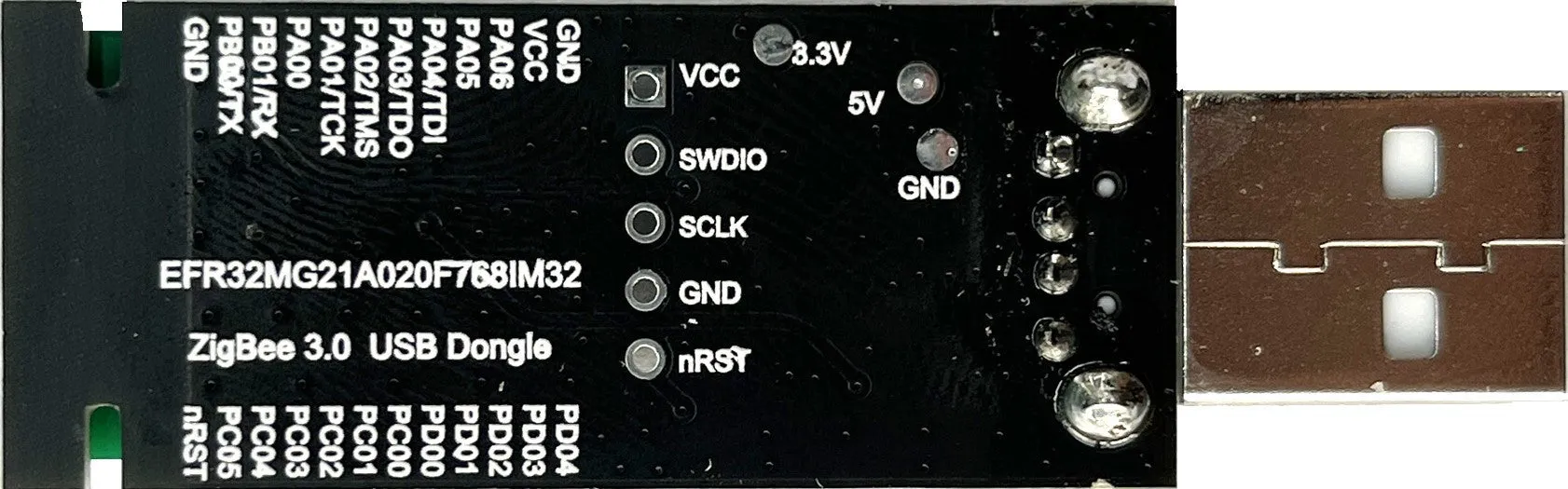
This Silicon Labs EFR32MG21 Zigbee 3.0 USB Dongle serves as a critical component for expanding smart home networks, specifically designed to bridge Zigbee-enabled devices with popular management platforms. By leveraging the robust EFR32MG21 chipset, this adapter offers a stable and efficient pathway for data exchange between your central hub and various smart sensors, lights, and switches. It comes pre-flashed with EZSP v8 firmware, eliminating the initial complexity of manual firmware installation for users of Home Assistant and Zigbee2MQTT. The device is engineered to provide a plug-and-play experience for those looking to establish or extend a Zigbee 3.0 network without the need for additional power supplies or complex wiring configurations.
Technical Specifications

The core of this dongle lies in its high-performance silicon components and optimized protocol support. Below are the key technical attributes that define its operation and compatibility within a smart home ecosystem.
Chipset and Firmware
At the heart of the device is the Silicon Labs EFR32MG21 SoC, a powerful multiprotocol platform designed for Zigbee 3.0 applications. It is paired with a CH340E chip to handle USB-to-UART conversion, ensuring broad compatibility with standard USB ports on computers and single-board computers. The unit ships with EZSP v8 (EmberZNet Serial Protocol version 8) pre-installed, which is the required protocol version for many modern integrations. This specific firmware version ensures that the dongle can communicate effectively with the ZHA integration in Home Assistant and the pre-alpha builds of Zigbee2MQTT, providing a reliable foundation for your automation rules.
Antenna and Signal Performance
Signal reliability is paramount in mesh networks, and this dongle is equipped with an integrated PCB antenna. This design choice offers a balance between compact size and performance, delivering a +20dBm output gain. This level of output helps in maintaining strong connections with end devices, potentially reducing the need for additional repeaters in medium-sized installations. While the antenna is fixed, the +20dBm power output is a significant feature for a USB-form factor device, aiming to provide sufficient range to act as a effective coordinator for a typical residential Zigbee network.
Connectivity and Updates
Communication with the host system occurs over a standard USB interface with a configured baud rate of 115200, ensuring fast and stable data throughput for command and control signals. Furthermore, the hardware supports Over-The-Air (OTA) updates via UART, a crucial feature for maintaining security and compatibility with new device definitions. To activate this mode, users must follow a specific physical sequence: press the BOOT button, then press and release the nRST button, and finally release the BOOT button. This capability ensures the dongle can be updated as the Zigbee alliance releases new standards or bug fixes.
Compatibility and Integration
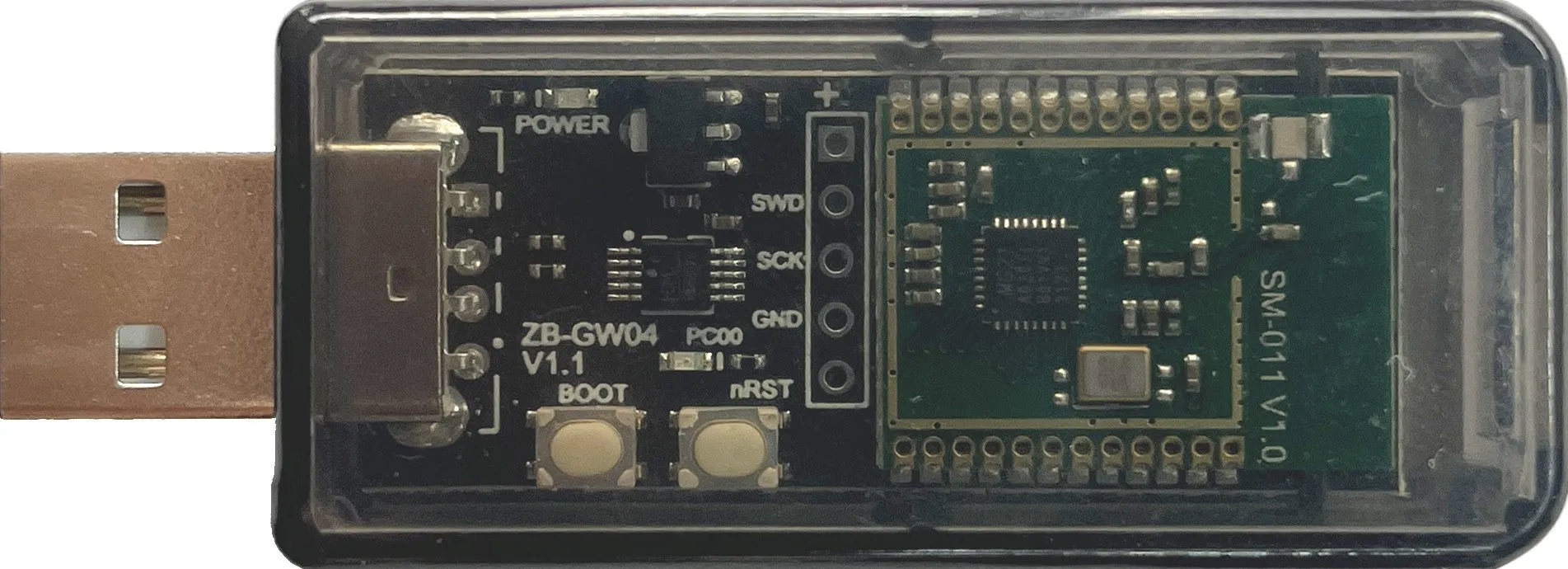
Designed for flexibility, this dongle targets the most popular open-source home automation platforms available today. Its primary strength lies in its ability to act as a universal translator for Zigbee devices within these ecosystems.
Software Platform Support
The dongle is explicitly verified for use with ZHA (Zigbee Home Automation) in Home Assistant, making it an ideal choice for users building their smart home on this platform. It is also noted as compatible with Zigbee2MQTT, although currently marked as pre-alpha for this specific hardware configuration. This dual support allows users to choose the integration method that best suits their technical comfort level and specific automation requirements. While it adheres to Zigbee standards, which suggests potential compatibility with other gateway solutions, users should be aware that functionality outside of Home Assistant and Zigbee2MQTT has not been confirmed in the source data.
Network Topology and Use
As a Zigbee 3.0 coordinator, this device initiates and manages the mesh network, allowing other mains-powered devices to act as routers and extend the network's reach. The USB form factor allows it to be easily plugged into a Raspberry Pi, a dedicated server, or a desktop computer running the necessary host software. Its role is critical as the central point of trust and management for all paired devices, handling the security keys and network parameters required for a secure smart home environment.
Physical Design and Build
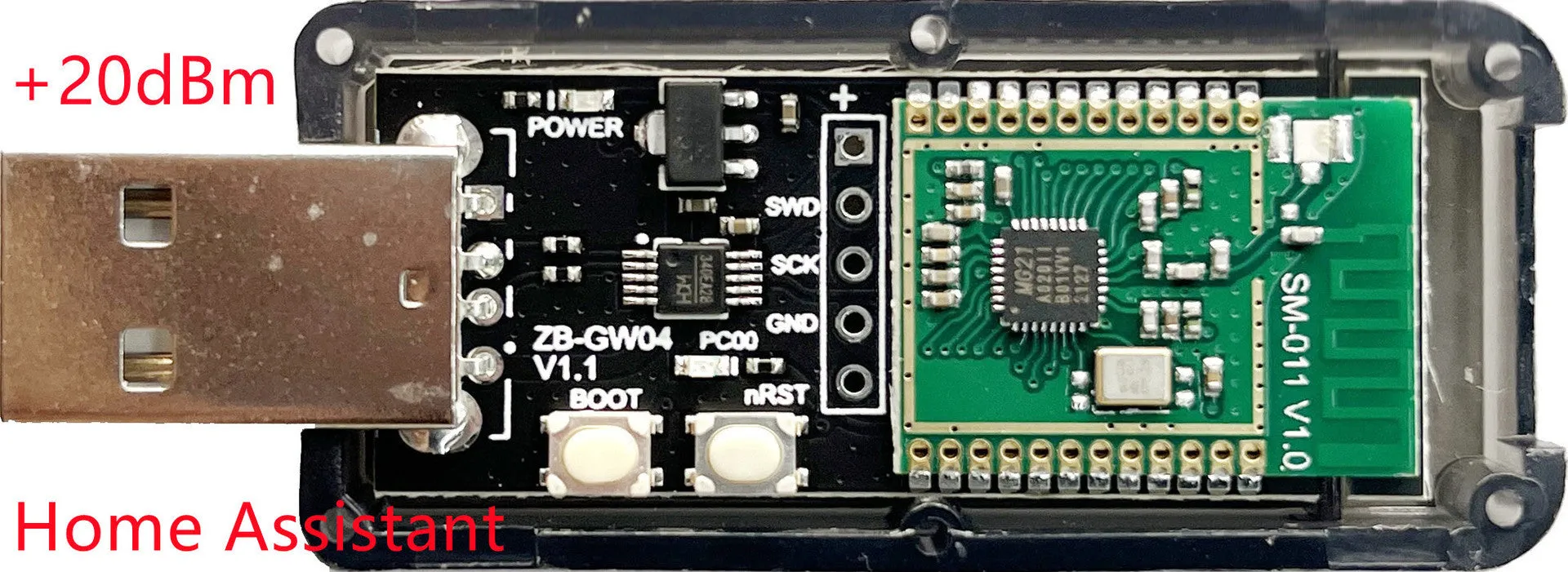
The physical construction of the dongle prioritises durability and compactness, ensuring it can remain plugged in permanently without obstructing adjacent ports.
Construction Quality
Housed in a plastic shell, the dongle is lightweight and designed to withstand the rigours of permanent installation. The plastic casing protects the internal PCB and antenna from dust and minor physical impacts. The compact design ensures that it does not block other USB ports on tight hubs, a common consideration for server setups where space is at a premium.
Package Contents
Each order includes exactly one USB dongle. No additional cables, extension cords, or mounting accessories are listed in the package contents, implying the device is intended for direct connection or use with existing USB infrastructure. Users should ensure they have an available USB port and, if necessary, a USB extension cable to position the dongle for optimal signal propagation away from potential USB 3.0 interference.