
WIFI development board ESP-8266EX chip Arduino compatible with 11 I/O pins and 1 ADC pin for IoT projects with onboard 5V 1A switching power supply supporting OTA wireless upload


WIFI development board ESP-8266EX chip Arduino compatible with 11 I/O pins and 1 ADC pin for IoT projects with onboard 5V 1A switching power supply supporting OTA wireless upload
Arduino-Compatible WIFI Development Board with ESP-8266EX Chip and Onboard Power Supply
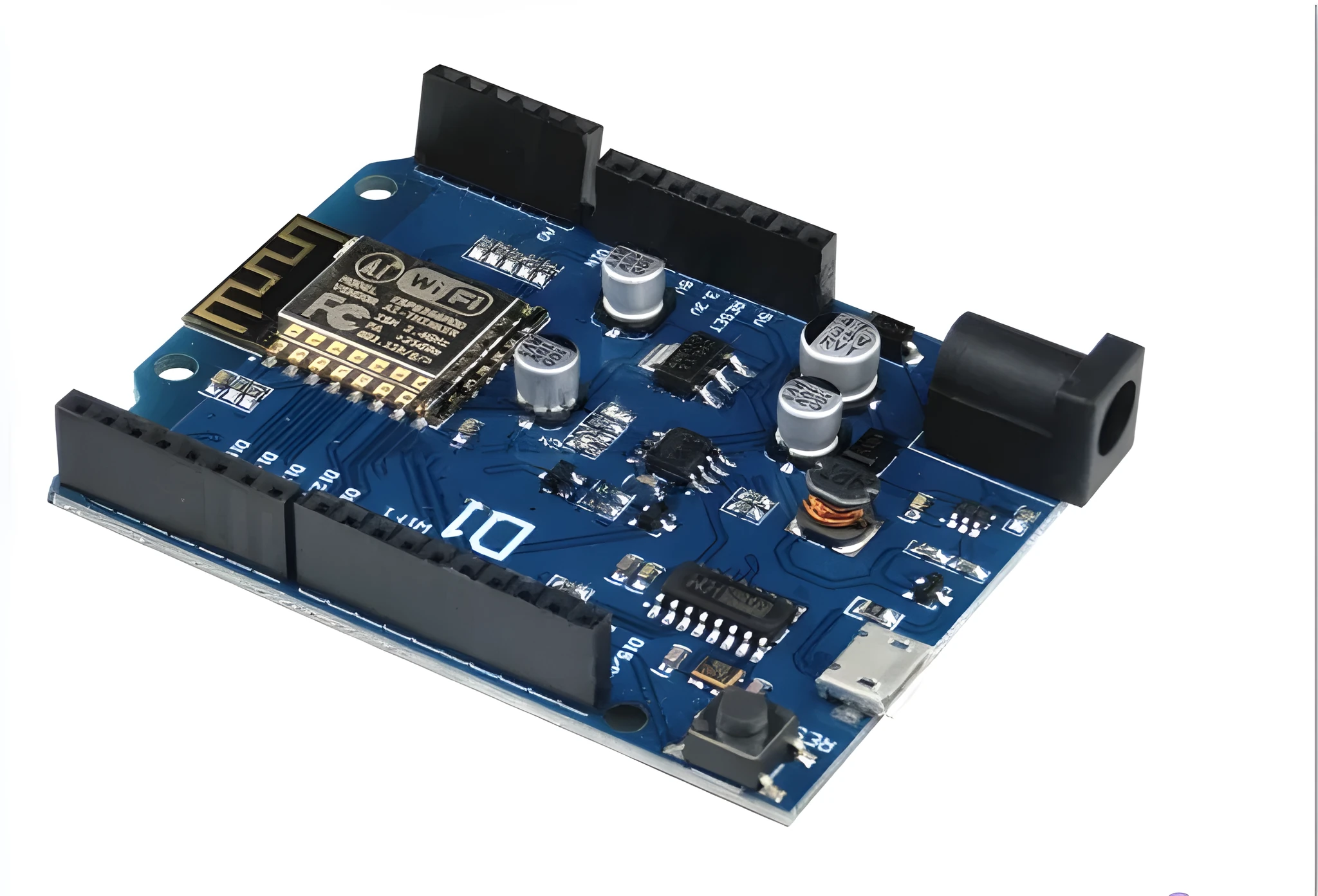
This WIFI development board offers a practical entry point for Internet of Things (IoT) projects requiring wireless connectivity. Centred around the ESP-8266EX chip, it provides a recognised platform for building connected devices. Its compatibility with the Arduino IDE means developers can use a familiar programming environment and extensive library support, reducing the learning curve for new projects. The board operates similarly to an Arduino UNO once the necessary hardware package is installed, making it accessible for those with existing Arduino experience. With built-in features like an onboard power supply and OTA update capability, it aims to simplify the development process for wireless applications.
Features and Construction

The board's design incorporates several key features aimed at IoT development. Its construction is based around the ESP-8266EX system-on-chip, which handles WIFI connectivity and processing tasks. The inclusion of standard development interfaces and a regulated power supply creates a self-contained unit suitable for prototyping.
Material and Build
The board is constructed using standard electronic manufacturing materials, including a printed circuit board (PCB) with copper traces for electrical connections. Electronic components such as the ESP-8266EX chip, passive components, and the switching power supply module are soldered to the board. The build includes necessary support circuitry for the microcontroller and its peripherals, providing a stable platform for development work.
Size and Practical Fit
While specific dimensions are not provided in the source material, development boards of this type are typically designed for breadboard compatibility or standalone use on a workbench. The inclusion of an onboard 5V 1A switching power supply reduces the need for external power adapters in many scenarios, contributing to a cleaner workspace. The pin layout with 11 I/O pins and 1 ADC pin follows common prototyping conventions for connecting sensors, actuators, and other peripherals.
Uses and Placement
This development board serves multiple roles in electronics projects, particularly those requiring internet connectivity. Its Arduino compatibility makes it suitable for educational settings, hobbyist projects, and professional prototyping where WIFI capability is needed. The board can function as the central controller in various IoT applications.
Event or Professional Use
In professional or event settings, the board could be deployed for temporary monitoring systems, interactive displays, or data collection nodes that require wireless communication. The OTA (Over-The-Air) wireless upload capability allows for remote firmware updates, which is practical for deployed devices in hard-to-reach locations or for maintaining multiple units without physical access. The maximum 24V input to the onboard power supply provides flexibility when using various power sources in different environments.
Everyday Home Use
For home enthusiasts and makers, this board enables projects like smart home sensors, weather stations, or automated garden systems that report data via WIFI. The Arduino compatibility means existing code examples and community support can be leveraged for common home automation tasks. The ADC pin with its 0-3.3V input range is suitable for reading values from many common sensors used in domestic projects.
Benefits and Buying Value
The board provides several practical benefits that streamline the development process for wireless projects. By integrating multiple functions into a single unit, it reduces the component count and complexity often associated with IoT prototyping. This integration aims to save time during the build phase and increase reliability during testing.
Reuse and Low Maintenance
The board's design supports reuse across different projects due to its general-purpose I/O pins and standard interfaces. The Arduino compatibility ensures code developed for one application can often be adapted for another with minimal changes. OTA updates reduce maintenance effort by allowing remote code deployment, which is particularly valuable for devices installed in permanent or semi-permanent locations.
Why Choose This Product
This development board may be selected for projects requiring WIFI connectivity combined with the Arduino ecosystem's simplicity and support. The onboard 5V 1A switching power supply eliminates the need for a separate regulator in many cases, while the 11 I/O pins provide adequate interfaces for typical sensor and actuator projects. For developers familiar with Arduino who are moving into wireless applications, this board offers a logical next step without requiring a completely new development environment.