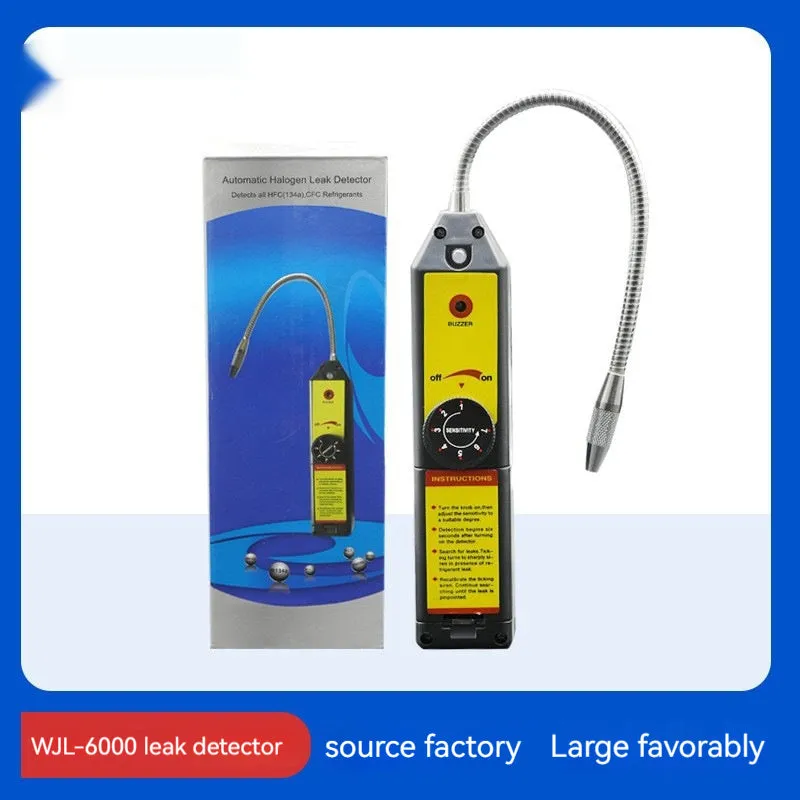
Car refrigerant leak detector electronic halogen sensor WJL-6000 model for air conditioning tightness testing, 20cm probe with high sensitivity, works at 0-52°C with 50-hour battery life


Car refrigerant leak detector electronic halogen sensor WJL-6000 model for air conditioning tightness testing, 20cm probe with high sensitivity, works at 0-52°C with 50-hour battery life
WJL-6000 Electronic Halogen Leak Detector for Vehicle Air Conditioning and Refrigerant Systems
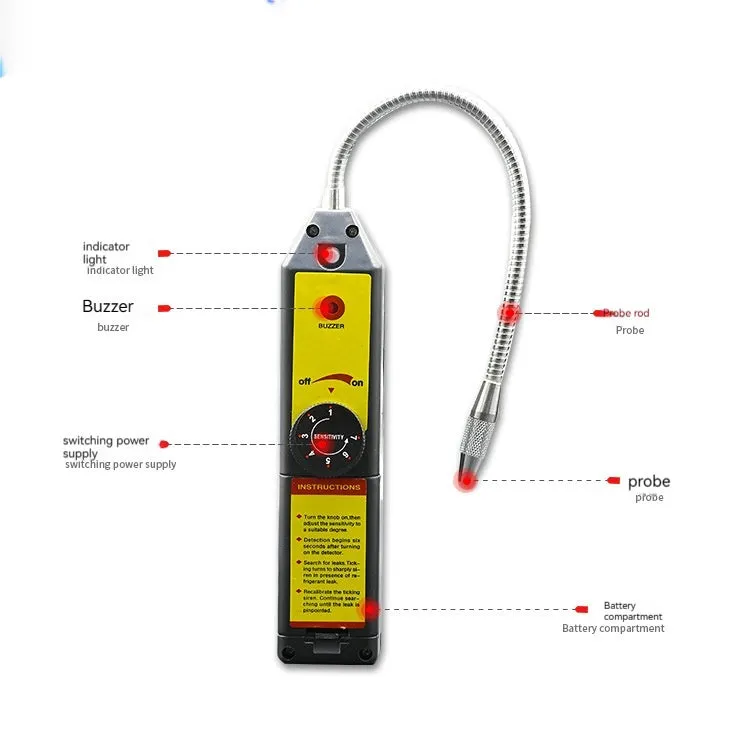
Identifying leaks in automotive air conditioning systems and other refrigeration circuits requires a sensitive and reliable tool. The WJL-6000 electronic halogen leak detector is designed for this specific task, providing an efficient method for pinpointing escapes of chloro-halogen refrigerants. Its primary function is to assist mechanics and technicians in verifying system integrity without relying solely on pressure tests or visual checks. The detector's operational parameters, including its temperature tolerance and probe length, are tailored for use in typical automotive workshop environments where space is limited and conditions can vary.
Features and Construction

The WJL-6000 is built around an electronic sensor calibrated to detect halogen-based refrigerants. Its design focuses on delivering a functional diagnostic result for professionals and serious DIY enthusiasts working on vehicle HVAC systems or similar equipment.
Material and Build
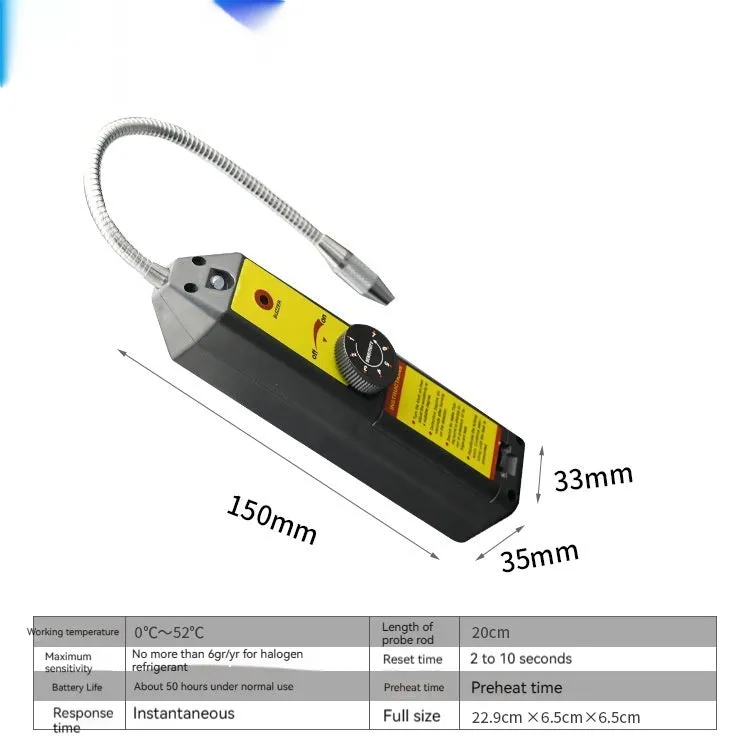
The source text specifies the device is an electronic detector, but does not list the exact materials used in its housing, probe, or internal circuitry. It is presented as a complete functional unit ready for detecting specific types of refrigerant leaks. The construction results in a compact tool measuring 22.9cm in length, with a width and depth of 6.5cm each, making it a manageable handheld device.
Size and Practical Fit
The overall dimensions of 22.9cm by 6.5cm by 6.5cm contribute to its portability, allowing it to be carried in a toolbox or stored easily. A key practical feature is the 20cm-long probe, which extends from the main body. This length is intended to help users reach into the tight spaces commonly found around car engine bays, air conditioning components, and pipework, facilitating a thorough inspection without excessive disassembly.
Uses and Placement
This detector has a clear application in maintenance and repair scenarios where system integrity is critical. Its use is defined by its sensitivity to specific refrigerants and its operational limits.
Event or Professional Use
The WJL-6000 is suited for professional automotive workshops, refrigeration service engineers, and vehicle servicing operations. Its ability to detect leaks with a stated maximum sensitivity and an instantaneous response time supports efficient workflow, helping to diagnose faults quickly. The 50-hour approximate battery life under normal use means it can handle multiple jobs between charges, reducing downtime in a busy workshop setting.
Everyday Home Use
For the advanced home mechanic or individual undertaking their own vehicle air conditioning repairs, this detector provides a more precise method than simple dye tests. Its operation within a 0 to 52°C temperature range covers most garage or driveway conditions throughout the year. The reset time of 2 to 10 seconds allows for systematic checking of different joints and components without long delays between readings.
Benefits and Buying Value
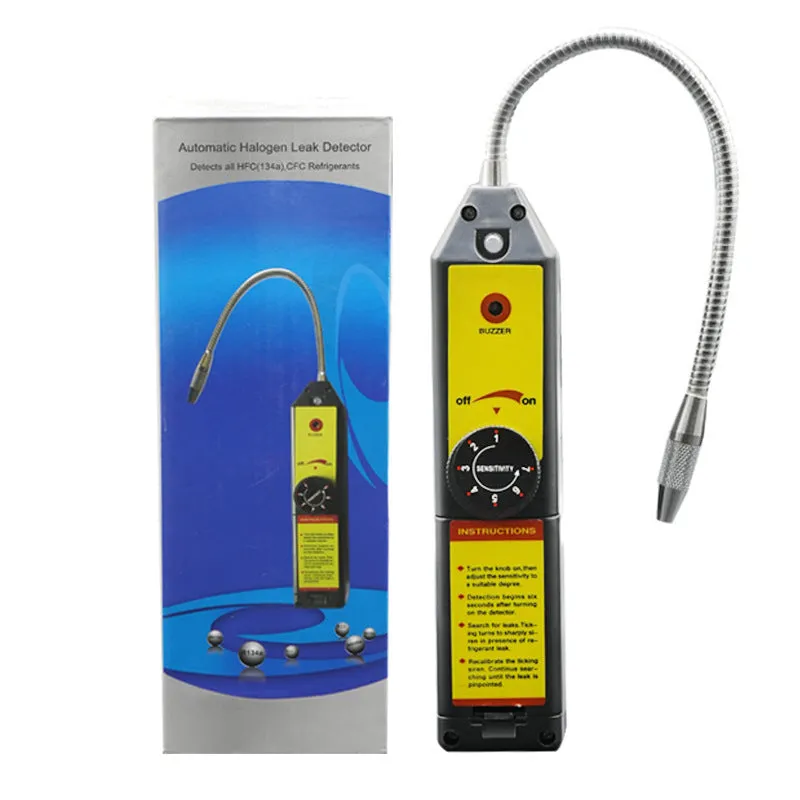
The value of the WJL-6000 lies in its focused functionality and the practical specifications provided, which guide its appropriate use and set realistic expectations.
Reuse and Low Maintenance
As an electronic diagnostic tool, its value is realised through repeated use across many jobs. The long battery life contributes to low ongoing operational cost, while the lack of complex consumables beyond potential battery replacement supports continued use. The device itself is the primary tool, with its care involving basic electronic device maintenance such as keeping it clean and stored appropriately.
Why Choose This Product
This detector offers a concrete solution for a specific problem: finding halogen refrigerant leaks. Its stated specifications, including probe length, operating temperature, and sensitivity, provide clear criteria for judging its suitability for a given task. For users who require a dedicated electronic detector rather than a more general-purpose tool, the WJL-6000's parameters define its niche. The choice is based on these measurable attributes aligning with the technical requirements of the repair work at hand.